Tuesday, February 9, 2021

Disinfecting Mistakes


ARE YOU MAKING THESE COMMON DISINFECTING MISTAKES?
 

Common Disinfecting Mistakes


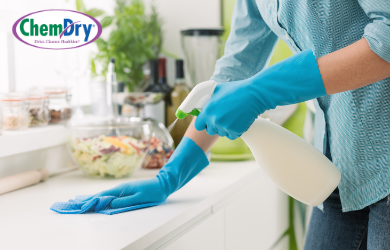
If you’re like most people, you didn’t spend a lot of time thinking about disinfecting before 2020. Most of us grabbed a familiar product off the store shelf and didn’t think twice about it. The COVID-19 pandemic has brought with it a greater need for disinfecting at home, but the dos and don’ts circulating on the internet can be confusing. Here are three of the top disinfecting mistakes to avoid: 

  • Clean before using disinfecting products. Cleaning refers to using water and a product like soap to remove dirt and other debris from surfaces. Cleaning does not kill germs and bacteria but can reduce the amount of them on a surface. It is a vital first step that shouldn’t be missed. Cleaning a surface before applying a disinfectant allows the product to work better. 
  • Read the product label before use. It’s common for people to assume that all disinfectants work the same way, but that couldn’t be farther from the truth. Each product has its own individual concentration, which means unique requirements for use. Reading the label ensures you’ll get the maximum effectiveness and protect yourself by knowing the proper safety protocols. 
  • Don’t immediately wipe the disinfectant away. It’s cleaning instinct for most of us, you spray and then you immediately wipe the surface. But that’s not how disinfectants work. In order to kill germs, disinfectants have a “dwell time” or amount of time they need to sit on the surface they’re disinfecting. This typically ranges from 1 to 10 minutes, depending on the product. If you aren’t giving the product time to do its job, you’re most likely leaving germs behind.

Prefer to leave the disinfecting to the experts? Johnson County Chem-Dry can help with our new MicroPro ShieldTM Service which includes the application of an EPA-registered, hospital-grade disinfectant along with the application of a protective antimicrobial coating to surfaces that were disinfected, inhibiting the growth and spread of microbes (bacteria and algae) on contact for up to 3 months.2

Learn more about our MicroPro Shield service here.


1Based on EPA registration # 82972-1. Hard surface bacteria tests were based on independent lab testing associated with EPA registration # 82972-1; sealed stone and VCT surfaces were evaluated for 38 pathogens including bacteria, germs and viruses. Our sanitizer associated with EPA registration # 82972-1 has been approved by the EPA for use against SARS-CoV-2, the cause of COVID-19.
2Based on EPA registration # 87583-3. Effective against algae and odor and stain-causing bacteria.

Carpet Cleaning Burleson, TX

Monday, November 16, 2020

Professional Wood Floor Deep Cleaning


We are excited and proud to introduce our Wood Floor Deep Cleaning Services in both Johnson County and Hood County.

Wood floors need regular maintenance to maintain their beauty and durability. Our Wood Floor Cleaning Process is specifically designed for solid hardwood and engineered wood floors as well as luxury vinyl tile (LVT) type flooring. Like other surfaces that see regular use, dirt, grime and debris build up over time that can damage wood floors as well as allergens and bacteria that can compromise home and family healthy.

Wednesday, November 11, 2020


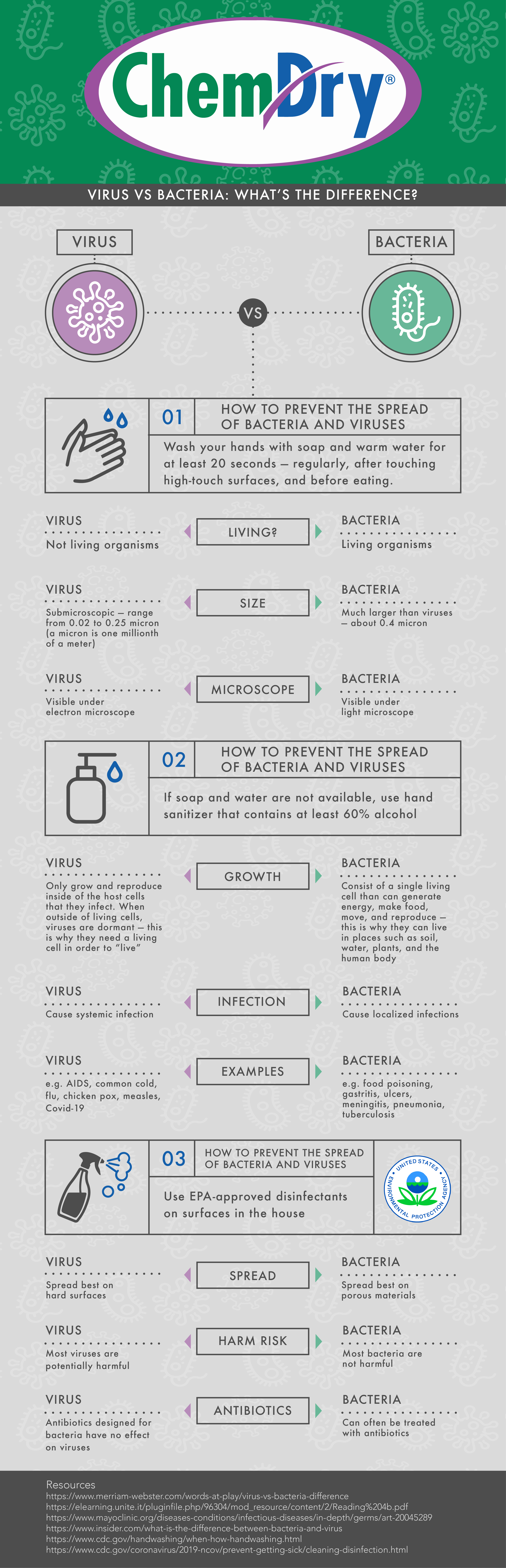
WHAT'S THE DIFFERENCE BETWEEN A VIRUS AND A BACTERIA?

In this time of uncertainty and stress from the current pandemic, keeping our homes healthy can feel overwhelming. Viruses, contagions, bacteria and other terms can seem confusing. A little knowledge can go a long way towards helping us cope and provide peace of mind that we can continue to keep our homes safe. So to help, we have put together this infographic comparing bacteria and viruses, and the differences between them. 

Check it out to get the science straight, and to stop your stress about sanitizing and disinfecting, read about the Sanitizing & Disinfecting services Johnson County Chem-Dry provides to help make your home healthier and safer for the entire family.

What's the Difference Between Viruses and Bacteria Infographic by Chem-Dry

VIRUSBACTERIA
Not a living organismLiving organisms
Submicroscopic — range from 0.02 to 0.25 micron (a micron is one millionth of a meter)Much larger than viruses — about 0.4 micron
Only grow and reproduce inside of the host cells that they infect. When outside of living cells, viruses are dormant — this is why they need a living cell in order to “live”Consist of a single living cell than can generate energy, make food, move, and reproduce — this is why they can live in places such as soil, water, plants, and the human body
Visible under electron microscopeVisible under light microscope
Cause systemic infectionCause localized infections
Examples of systemic infections: AIDS, common cold, flu, chicken pox, measles, Covid-19Examples of locaized infections: food poisoning, gastritis, ulcers, meningitis, pneumonia, tuberculosis
Antibiotics designed for bacteria have no effect on virusesCan often be treated with antibiotics
Most viruses are potentially harmfulMost bacteria are not harmful
Carpet Cleaner Near Me

How to Prevent The Spread of Bacteria and Viruses

  • Wash your hands with soap and warm water for at least 20 seconds
    • Wash hands regularly, after touching high-touch surfaces, and before eating.
    • If soap and water are not available, use hand sanitizer that contains at least 60% alcohol
    • Use EPA-approved disinfectants on surfaces in the house

For more information on the services we provide, visit our website at Carpet Cleaner Near Me. Independently owned and operated. Serving Johnson County and Hood County, Texas.